
Google ChromeLatest Version
★★★★☆ 4. · (49M Reviews)
151.0
27 MB
10B+
OS 5+
100% Secured & Verified APK Files
App Preview
Screenshots:






Google Chrome APK Download – Latest Version 2026
Google Chrome remains the most widely used mobile browser across Android devices worldwide. It combines a clean interface with fast page loading, deep Google account integration, and strong security standards. This guide covers everything about the Google Chrome APK, including features, installation, safety, and update steps.
Quick Facts
| Detail | Information |
|---|---|
| App Name | Google Chrome |
| Latest Version | v139.0 |
| Size | 95 MB |
| Platform | Android 8.0 and above |
| Developer | Google LLC |
| Category | Web Browser |
| Availability | Direct APK |
What Is Google Chrome?
Google Chrome is the official web browser developed and maintained by Google for Android, iOS, and desktop platforms. It syncs bookmarks, passwords, and browsing history across every device signed into the same Google account. Because Google builds and updates it directly, Chrome remains one of the most trusted and consistently supported browsers available today.
The app is available directly through the Google Play Store for most users. However, some people search for the standalone APK file instead, usually to sideload it on devices without Play Store access or to install a specific version manually. Either method installs the same official application, since Google does not distribute modified builds of Chrome.
Chrome holds the largest share of the global mobile browser market by a wide margin. This dominance comes from tight integration with Google services like Search, Gmail, and Google Drive. As a result, millions of users rely on it daily for browsing, research, and everyday online tasks.

Key Features of Google Chrome
Google Chrome packs a wide set of tools built around speed, security, and everyday convenience. The list below covers the features most users rely on daily.
Fast Page Loading and Rendering
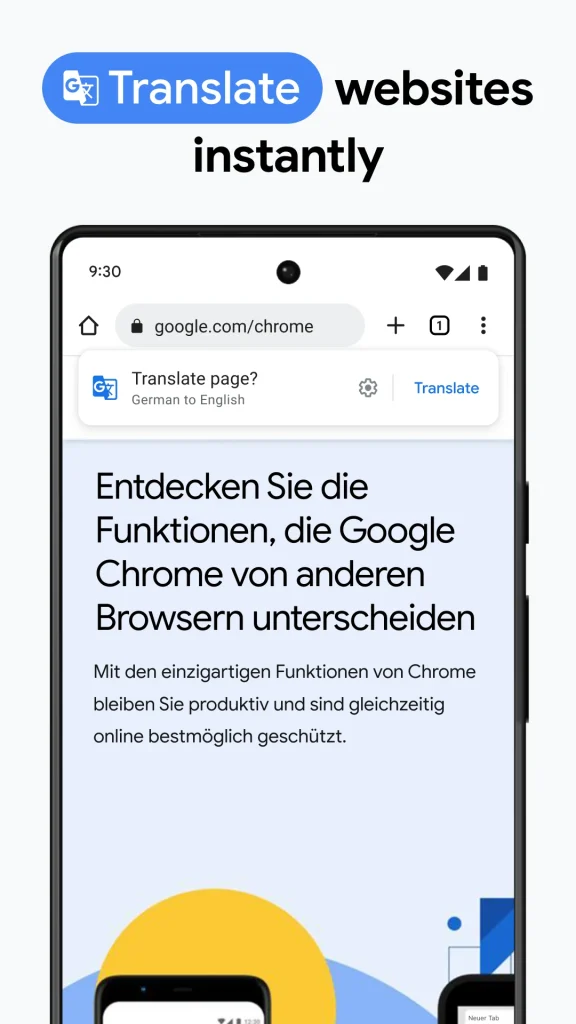
Chrome uses the Blink rendering engine, which loads pages quickly even on average network speeds. Data Saver mode compresses pages further for users on limited mobile data. Together, these tools keep browsing smooth across a wide range of device types.
Cross-Device Sync
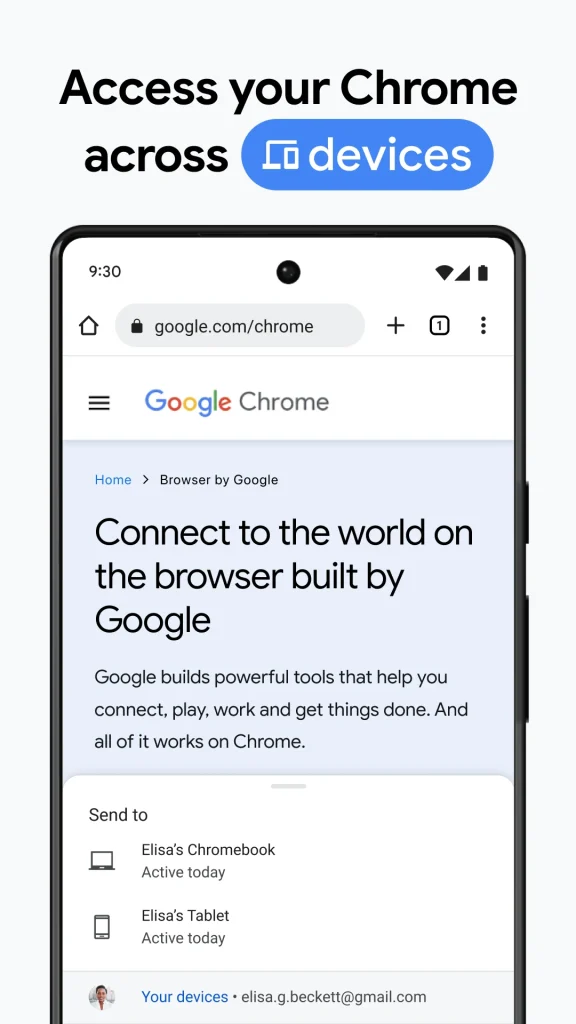
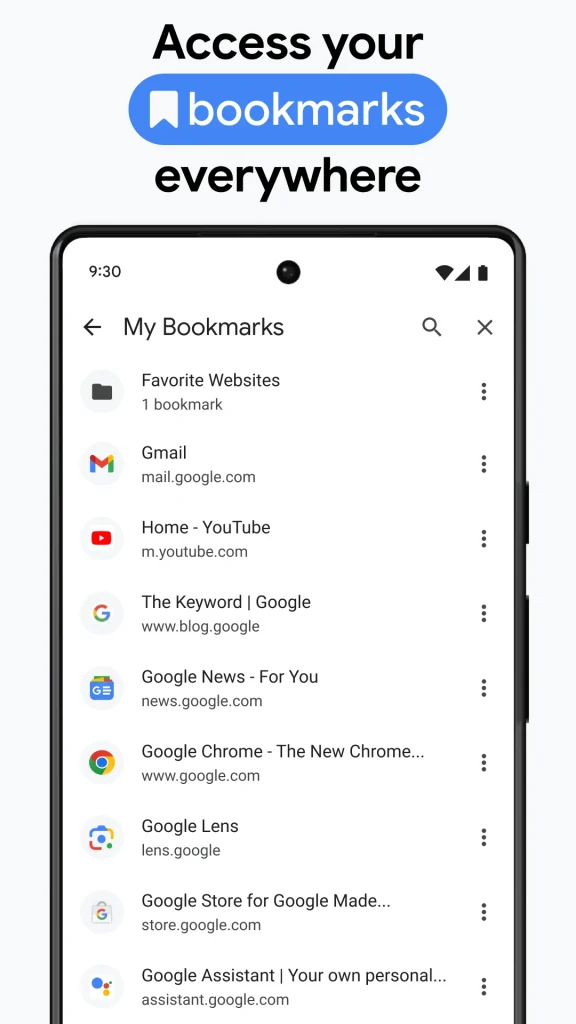
Signing into a Google account links bookmarks, open tabs, and browsing history across phone, tablet, and desktop. A tab opened on a laptop can be resumed instantly on a phone through the Recent Tabs menu. This continuity makes Chrome especially useful for people who switch between devices throughout the day.
Built-In Password Manager
Google Chrome saves and autofills passwords securely through Google Password Manager. It also flags weak or reused passwords and alerts users if any saved credentials appear in a known data breach. This reduces the need for a separate password management app for casual users.
Incognito Mode
Incognito browsing opens a private session that does not save history, cookies, or site data locally. Multiple incognito tabs can run alongside regular tabs without mixing browsing data. This proves useful for shared devices or temporary private searches.
Safe Browsing Protection
Google’s Safe Browsing technology actively warns users before they visit sites flagged for phishing, malware, or deceptive content. The feature also checks downloaded files against known threat databases before completion. Consequently, this protection runs quietly in the background without requiring manual setup.
Voice Search and Google Lens Integration
The address bar supports voice search directly, letting users search hands-free while multitasking. Google Lens integration allows a user to search using a photo instead of typed text. Both tools connect directly to Google’s search index for fast, relevant results.
Customizable New Tab Page
The new tab screen displays shortcuts to frequently visited sites alongside a customizable background. Users can also enable a news feed called Discover, which surfaces articles based on browsing interests. This turns the new tab page into a lightweight home screen rather than a blank slate.
Extensions Support on Desktop Sync
While mobile Chrome does not run extensions directly, settings and preferences sync from desktop Chrome where extensions are active. Users who rely on ad blockers or productivity tools on desktop still see synced bookmarks and settings reflected on mobile. This keeps the overall browsing setup consistent across platforms.
Dark Mode and Accessibility Tools
Google Chrome supports a full dark theme that reduces eye strain in low-light conditions. Built-in accessibility options include text scaling, screen reader compatibility, and simplified page view. These tools make the browser usable for a wider range of visual and reading preferences.
App Requirements Before Installation
A few basic checks help the installation go smoothly. Review the table below before starting the download.
| Requirement | Details |
|---|---|
| Android Version | Android 8.0 or higher |
| Free Storage | At least 150 MB recommended |
| Internet | Stable Wi-Fi or mobile data |
| Google Account | Recommended for sync features |
| RAM | 2 GB minimum for smooth performance |
Info Box: Before You Install Confirm the phone has enough battery to avoid interruption during setup. Close other heavy apps to free up memory during installation. A stable connection prevents partial or corrupted downloads.
Google Chrome Latest Version Overview
Version 139.0 focuses on speed improvements, security patching, and refined tab management. The update also improves memory efficiency on lower-end devices. Below is a short summary of what changed.
Because Chrome updates directly through Google, most users receive new versions automatically through the Play Store. Manual APK installation becomes relevant mainly for users testing a specific version or working around regional restrictions. Checking release notes before a manual install helps confirm compatibility with the device in use.
How to Download and Install Google Chrome APK
Follow these steps in order to avoid installation errors.
Info Box: Common Install Errors “App Not Installed” usually means an older version conflicts with the new file. Uninstalling the previous version, though it risks losing local browsing data without sync enabled, often resolves this. Corrupted downloads can also cause this error, so a fresh download from the same source is worth trying.
Why Users Choose Google Chrome
Google Chrome biggest draw remains its speed and consistency across devices. Because Google controls both the browser and many of the services it connects to, features like autofill, translation, and search suggestions tend to work more smoothly than in third-party browsers. This tight integration explains why so many users default to Chrome without considering alternatives.
Security also plays a major role in its popularity. Automatic updates through the Play Store mean most users always run a current, patched version without manual effort. In addition, frequent security patches address newly discovered vulnerabilities faster than many competing browsers manage.
Ease of use matters as well, particularly for less technical users. The interface stays simple without hiding advanced settings from users who want more control. As a result, Chrome works equally well as a first browser for a new device and as a daily driver for experienced users.
Google Chrome Pros and Cons
| Pros | Cons |
|---|---|
| Fast, consistent performance | Higher RAM usage than lightweight browsers |
| Strong security and Safe Browsing protection | Limited extension support on mobile |
| Seamless cross-device sync | Heavy reliance on a Google account for full features |
| Regular automatic updates | Data collection tied to Google services |
| Built-in password manager | Fewer customization options than some competitors |
| Wide compatibility with modern web standards | Battery drain on older devices during heavy use |
How to Use Google Chrome After Installation
Getting started takes only a few minutes once the app is installed.
- Open Google Chrome and sign in with a Google account, or skip sign-in for local-only browsing.
- Import bookmarks or passwords from another browser if prompted during setup.
- Set Chrome as the default browser through phone settings if desired.
- Customize the new tab page with preferred shortcuts and background.
- Adjust privacy settings under Site Settings to control cookies and permissions.
If pages load slowly, check the internet connection first, since this causes most performance issues. Storage warnings usually mean cached data needs clearing, which can be done through Settings and Privacy. A restart combined with the latest version update fixes most remaining glitches.
How to Update Google Chrome
Keeping Chrome updated protects against security vulnerabilities and ensures access to the newest features. The steps below outline the standard method.
- Open Play Store – Navigate to the Play Store app and search for Chrome.
- Check for Updates – Tap Update if a newer version is available.
- Install Automatically – Enable auto-update in Play Store settings for future versions.
- Manual APK Alternative – Download the latest APK directly if Play Store access is unavailable.
What Happens If You Skip Updates: Older Chrome versions gradually lose compatibility with modern websites over time. Missing security patches also raise exposure to known vulnerabilities. Outdated builds tend to run slower and lack the newest privacy protections.
Google Chrome Old Versions
Some users prefer older builds for reasons tied to device compatibility or personal preference. The table below lists commonly requested older versions and their general strengths.
| Version | Highlights | Best For |
|---|---|---|
| v125.0 | Lightweight, lower memory usage | Older or low-RAM devices |
| v130.0 | Improved tab grouping | Users managing many open tabs |
| v135.0 | Enhanced Safe Browsing detection | Security-focused users |
| v138.0 | Faster Discover feed loading | Frequent news readers |
| v139.0 | Refined performance and stability | Most current Android devices |
Older versions generally suit devices running an outdated Android build or limited RAM. They also appeal to users who prefer a familiar interface without recent visual changes. Switching versions works best after confirming that bookmarks and passwords remain synced through a Google account.
Google Chrome vs Other Browsers
| Feature | Google Chrome | Firefox | Samsung Internet |
|---|---|---|---|
| Speed | Very fast | Fast | Fast |
| Sync Across Devices | Excellent, Google account based | Good, Firefox account based | Limited to Samsung devices |
| Extension Support | Desktop only | Full mobile support | Limited mobile support |
| Privacy Controls | Standard, Google-linked | Strong, privacy-focused | Standard |
| Default on Android | Yes, on most devices | No | Yes, on Samsung devices |
| Data Usage | Moderate | Lower with tracking protection | Moderate |
Google Chrome Alternatives
Users who want a different browsing experience sometimes explore other options as well.
- Mozilla Firefox – Known for strong privacy tracking protection and full extension support.
- Samsung Internet – Preinstalled on Samsung devices with deep system integration.
- Microsoft Edge – Offers similar speed with added productivity tool integration.
- Brave Browser – Focuses on built-in ad blocking and enhanced privacy by default.
Each alternative shares core browsing functionality while differentiating through privacy focus, extension support, or device integration. The right choice generally depends on whether speed, privacy, or ecosystem integration matters most to the user.
Frequently Asked Questions
Yes, Google Chrome is completely free and does not require any payment or subscription.
Is it safe to download the Chrome APK outside the Play Store?
Downloading directly from Google’s official APK source is safe. However, third-party sites should be avoided since they may distribute modified or outdated files.
This usually happens due to a version conflict or insufficient storage space. Clearing storage and downloading a fresh copy typically resolves the issue.
Yes, Chrome functions fully without sign-in. However, sync features like bookmarks, passwords, and history across devices require a Google account.
Clearing cached data and closing unused tabs often improves performance. Updating to the latest version also resolves many speed-related issues.
Yes, multiple browsers can coexist on the same phone without conflict. Users can set any installed browser as the default at any time.
No, mobile Chrome does not run browser extensions directly. Extension settings only sync from desktop Chrome, where they remain active.
Chrome updates roughly every four weeks through the Play Store. Security patches may arrive more frequently outside the standard release cycle.
Battery usage varies based on open tabs and background activity. Closing unused tabs and disabling background sync helps reduce power consumption.
Yes, signing into the same Google account on a new device automatically restores bookmarks, passwords, and history. No manual backup file is required for this process.
Who Should Use Google Chrome?
Chrome suits users who value speed, simplicity, and a browser that stays current without manual effort. It fits well for anyone already invested in Google’s ecosystem, since Gmail, Google Drive, and Google Photos all connect smoothly through the browser. Students and professionals who switch between a phone, tablet, and laptop throughout the day benefit most from its sync capabilities.
It also appeals to users who prefer a browser that requires little configuration out of the box. Safe Browsing protection runs automatically, and updates arrive without any manual intervention through the Play Store. Anyone who wants a reliable default browser without spending time on settings tends to find Chrome a comfortable fit.
That said, Chrome is not the ideal choice for everyone. Users who prioritize maximum privacy or want full extension support on mobile are generally better served by an alternative like Firefox. Anyone concerned about data collection tied to a Google account should weigh that trade-off before making Chrome a daily driver.
Chrome Privacy and Data Settings
Google Chrome includes several built-in tools for managing how much data it collects and shares. The Privacy and Security section under Settings controls cookie behavior, site permissions, and Safe Browsing sensitivity. Adjusting these settings allows users to strike a balance between convenience and data minimization.
Site-specific permissions can be reviewed and revoked individually, covering camera, microphone, location, and notification access. This granular control prevents unnecessary background access from sites that no longer need it. Reviewing these permissions periodically is a good habit for anyone concerned about long-term data exposure.
Chrome also offers a “Clear Browsing Data” tool that removes history, cookies, and cached files in a single action. Users can select a specific time range rather than clearing everything at once. This makes it easy to maintain a lighter browsing footprint without losing saved passwords or bookmarks in the process.
Chrome for Business and Multi-User Devices
Chrome also supports environments where a single device serves multiple people, such as shared family tablets or workplace phones. Multiple user profiles can be added, each with separate bookmarks, history, and saved passwords. Switching between profiles takes only a few taps and keeps browsing data fully isolated between users.
Guest Mode offers a further option for temporary use without affecting any saved profile. This suits situations where a device is lent briefly to someone else, since no history or login data carries over afterward. Once the guest session ends, all related browsing data clears automatically.
For workplace use, Chrome supports managed configurations through Google Workspace, allowing administrators to enforce specific security policies. This includes restricting extensions, controlling site access, and enforcing Safe Browsing settings at an organizational level. Businesses that already rely on Google Workspace tools generally find this integration reduces the need for separate browser management software.
Final Verdict
Google Chrome delivers a fast, secure, and consistently updated browsing experience backed directly by Google. Its strength lies in deep account integration, reliable automatic updates, and broad compatibility with modern websites. Users who prioritize speed and cross-device continuity generally find it the most convenient option available.
Those seeking stronger built-in privacy protection or full mobile extension support may find alternatives like Firefox a better fit. For most users, Chrome remains the simplest choice due to its default presence on Android and tight Google ecosystem integration. Downloading directly from the Play Store or Google’s official source ensures the safest and most reliable installation experience.